FlavCity Chocolate Peanut Butter Protein Smoothie Review: Reading the 20-Serving Bag
A label-based review, not a taste test: the current 46-gram serving, calories and nutrients, whey/collagen blend, sweeteners, milk and peanut declarations, shared-equipment warning and preparation directions.
Disclosure: This page may contain affiliate links. They do not influence our editorial conclusions. Read the disclosure.
Our pick
- See price at FlavCity
Top pick
FlavCity
FlavCity sells protein smoothie powders, single-serve packets, beverages and other products through shopflavcity.com. Formula ingredients, nutrition panels, all...
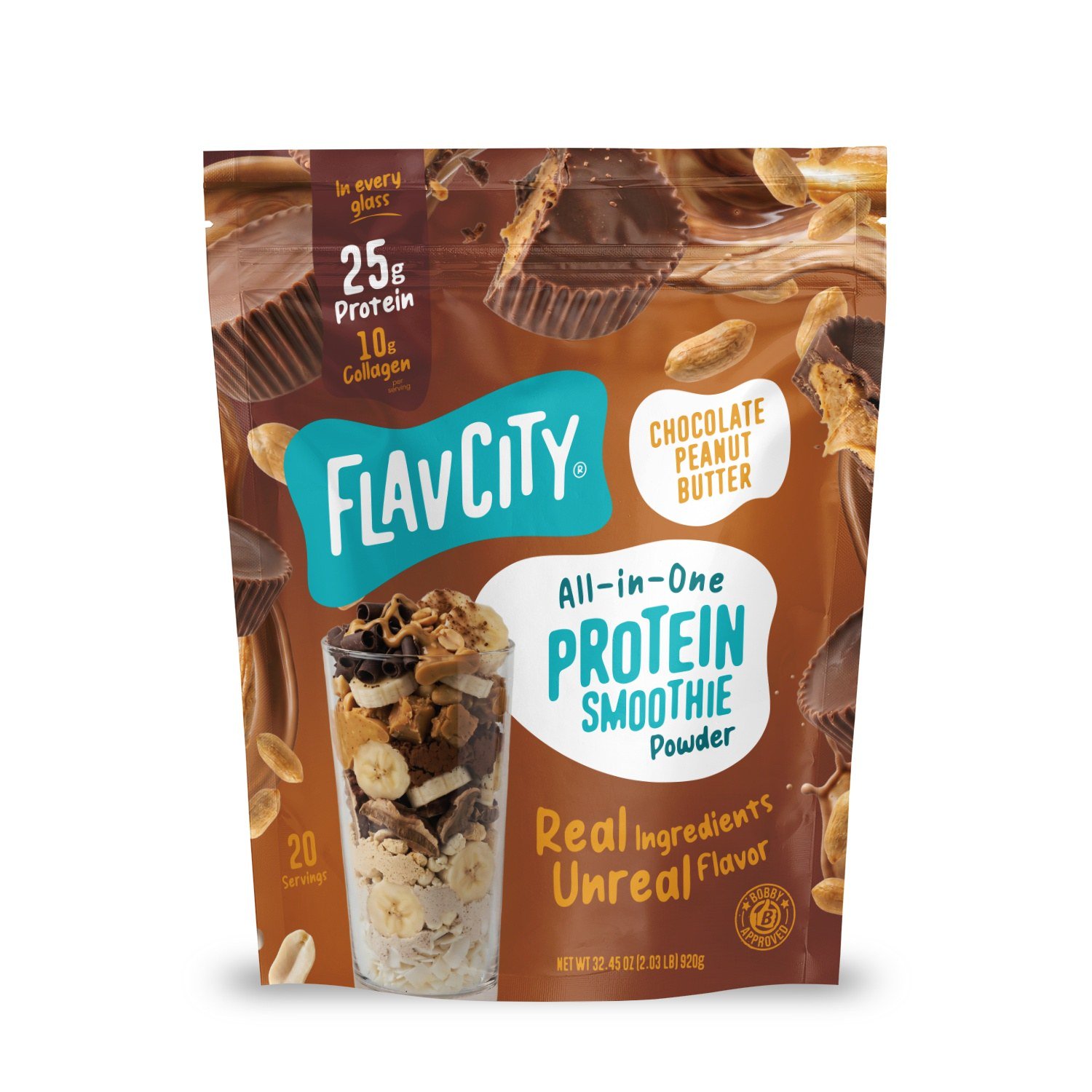
FlavCity’s Chocolate Peanut Butter Protein Smoothie is not simply a plain whey powder with a flavor added. The current 20-serving bag lists a mixture of dairy proteins, bovine collagen, peanut flour, fruit and coconut powders, sweeteners, and mushrooms. Understanding that combination is more useful than treating the front-of-bag protein number as the entire product description.
This is a label-based review using official product information and gallery images checked November 18, 2026. We did not taste the powder, test its mixing performance, commission laboratory analysis, or evaluate clinical outcomes. Descriptions such as creamy or dessert-like belong to the manufacturer’s marketing, not to an experience reported by Brands Review.

Identify the current bag before comparing numbers
The official gallery’s Nutrition Facts panel states 20 servings per container, with one serving defined as one scoop, 46 grams. The store’s public product data listed the available default variant at $59.99 when researched. That is approximately $3 per labeled serving before shipping or tax, not a delivered price or a permanent offer.
Keep that identity attached to the figures below. Older artwork, individual packets, other flavors, and Plant-Based Vanilla can use different serving descriptions. A scoop is not a standard unit of weight across the range. If your received package differs, use its current label rather than forcing these figures onto it.
The product page also links to a broader flavor selection. Those neighboring products are not interchangeable evidence for this bag’s formulation or current stock. This review concerns the specific Chocolate Peanut Butter listing and the corresponding 20-serving label images.
What the Nutrition Facts panel actually says
For the labeled 46-gram portion, the official panel reports:
| Label item | Amount per serving |
|---|---|
| Calories | 180 |
| Protein | 25 g |
| Total fat | 3 g |
| Total carbohydrate | 11 g |
| Dietary fiber | 3 g |
| Total sugars | 3 g |
| Added sugars | 0 g |
| Sodium | 270 mg |
These are manufacturer label values, not independently measured results. They describe the powder portion shown on the label. Choosing milk rather than water, or adding other ingredients, changes the prepared drink’s totals according to what you add. Do not assume the table already includes the nutrition of every suggested mixing liquid.
“Zero added sugars” is also different from “sugar-free” or “unsweetened.” The same panel reports 3 grams of total sugars, and the ingredient list includes stevia extracts. The label does not justify describing the drink as free of sweetness or as suitable for an individual medical diet without further assessment.

Read 25 grams of protein and 10 grams of collagen correctly
The product description advertises 25 grams of protein and 10 grams of collagen per serving. The Nutrition Facts panel’s protein line is 25 grams. Those two advertised numbers should not be added together to create a claim of 35 grams of total protein.
The ingredient list includes whey protein concentrate, collagen, milk protein concentrate, and fermented nutritional yeast protein. It does not say that the entire 25 grams is whey protein with another 10 grams of protein on top. Nor does the reviewed material provide a detailed contribution from every protein ingredient or an independently verified amino-acid analysis.
For this product, the reasonable statement is that several protein-containing ingredients appear in a blended formula. We do not infer a specific recovery effect, muscle-gain result, joint benefit, or hair and skin outcome from the ingredient names alone.
The rest of the ingredient list changes the interpretation
The official list names organic cocoa powder and peanut flour alongside banana powder and coconut milk powder. These help explain the intended flavor profile and the manufacturer’s reference to fruit. Their presence does not establish that a serving supplies a whole banana, a particular amount of fruit, or the same nutritional contribution as separately chosen whole foods.
The list also includes unrefined sea salt, organic stevia leaf extract identified as Reb A, another stevia extract identified as Reb M, and organic cordyceps and reishi powders. It does not quantify every one of those ingredients in the material reviewed. Without ingredient-specific amounts or finished-product evidence, we cannot assess a claimed cognitive or sustained-energy effect from the mushroom names.
“Grass-fed” is a manufacturer sourcing description attached to several animal-derived ingredients. It should not be expanded into a claim that the entire formula is certified organic, lactose-free, allergen-free, or independently certified for every dietary standard. Likewise, a creator’s approval mark on the packaging is not a substitute for external testing or a regulator’s endorsement.
Milk and peanut declarations are central, not fine print
Both the product page and rear packaging declare milk and peanut. The package also says it is manufactured on shared equipment that may contain peanuts or other tree nuts. We are reporting the manufacturer’s statements, not providing individual allergy clearance.
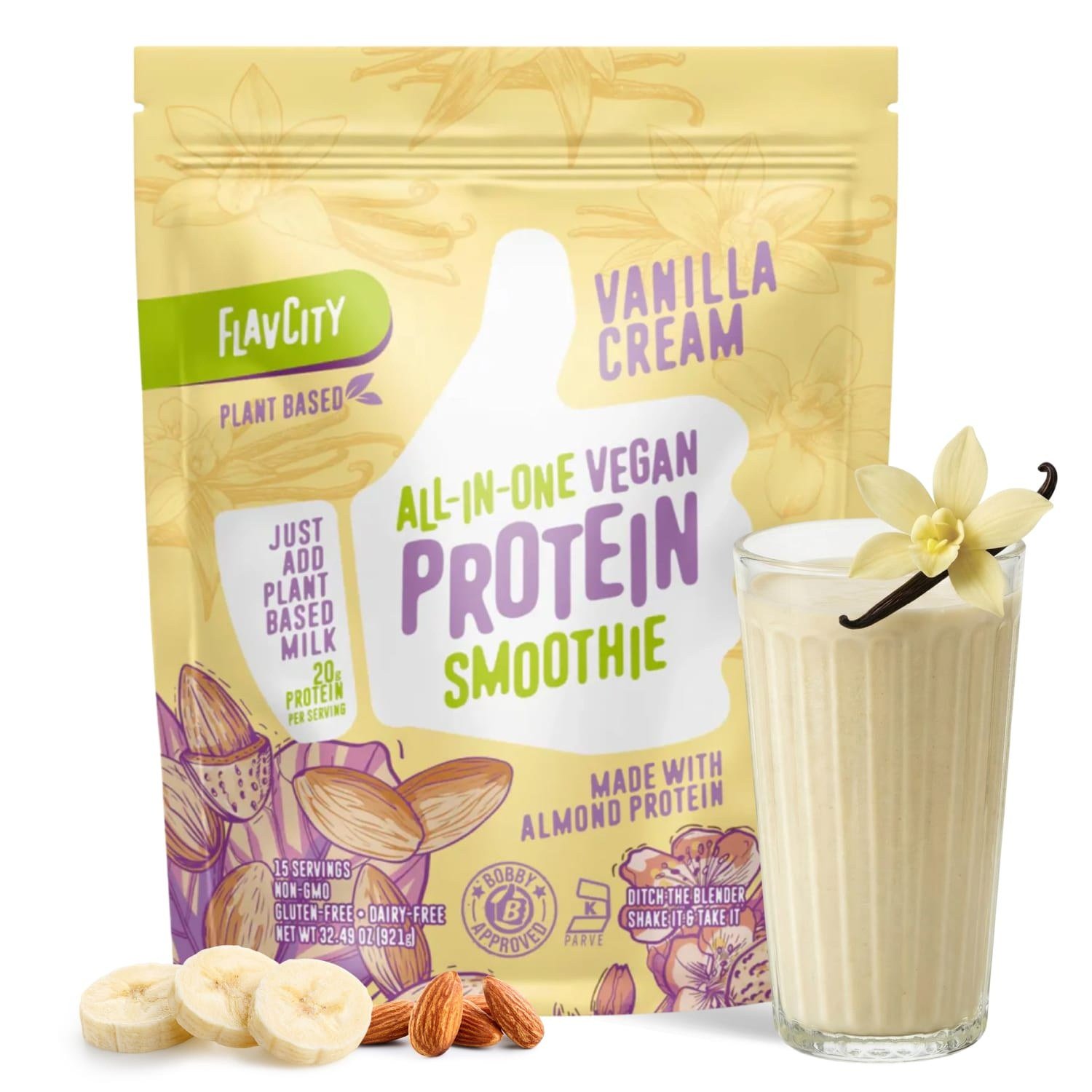
Using a plant-based mixing liquid does not remove the milk proteins or bovine collagen already present in the powder. This whey-and-collagen formula is therefore not the same product as the brand’s explicitly plant-based option. Nor should “grass-fed whey” be read as evidence that someone with a milk allergy can use it.
If avoiding a particular ingredient is essential, inspect the current package and verify unresolved manufacturing questions with the manufacturer before consuming it. Do not assume that an ingredient absent from a short marketing description is absent from the full formula or from every production environment. Our specific whey-versus-plant-based comparison keeps the two products’ declarations separate.
Preparation is documented; sensory performance is not independently verified
The product page allows milk or water and shows 12 ounces of liquid. The rear bag directions illustrate adding one scoop to 12 ounces of milk and shaking vigorously for 20 seconds. Those are manufacturer preparation instructions, not our measured mixing time or a finding that every shaker produces the same texture.
Follow the portion and directions on the package you receive. Extra liquid changes concentration; extra ingredients change the drink itself. Neither alteration should be described as fixing a defect or delivering a health outcome without evidence. No blender requirement is presented for the basic preparation, but that does not prove the powder can never clump.
The bag instructs storage in a cool, dry place. The reviewed material does not establish a universal safe storage duration for a mixed drink, so we do not transfer the dry product’s shelf-life language to a beverage containing milk or other perishable ingredients.
Keep the warnings and meal language in view
The product page and rear bag display a California warning concerning reproductive harm from exposure to lead and cadmium. That warning should not be omitted from a close reading of the package. The product materials reviewed here do not provide batch-specific concentration results from which we could quantify a particular consumer’s exposure or clinical risk.
We therefore do not describe the product as metal-free, give blanket safety assurances, or infer an individual medical outcome from the warning alone. A product review cannot replace individualized advice where a health condition, pregnancy, medication, or medically required diet affects suitability.
The page’s meal-replacement FAQ also tells readers to check with their doctor before replacing meals. Marketing language such as complete smoothie should not be converted into an assertion that this 180-calorie powder portion meets every person’s complete meal needs or guarantees weight loss.
A purchase decision based on evidence, not a taste score
The documented proposition is a flavored, multi-ingredient powder with a specified portion, a clear milk-and-peanut declaration, and a preparation method designed around a shaker. Whether you enjoy its sweetness, texture, or flavor remains untested in this review. The product’s listed price and protein number cannot answer those sensory questions.
Compare format choices in our bags-versus-packets guide, and read the FlavCity brand hub for purchase-policy coverage. The official-store link follows our joined affiliate route and may earn Brands Review a commission. That commercial relationship does not turn manufacturer descriptions into verified clinical benefits or personal experience.
References
Meet your guide
Lipeiguan
author
What to read next
FlavCity Flavor Guarantee vs. Refunds: Taste, Transit Damage, and Lost Orders Find the correct post-purchase route: a restricted one-time full-size bag flavor swap, final-sale policy, approved lost/damaged transit replacement, sold-out fallback, evidence and...  FlavCity Subscription vs. One-Time Orders: Billing, Shipping, and Cancellation Timing Separate recurring-order marketing from written terms: eligibility, current 15% and domestic-shipping presentation, variable future prices, seven-day billing cutoff, skip/pause/can...
 FlavCity Whey vs. Plant-Based Protein Smoothies: Labels, Allergens, and Serving Sizes Compare two specific formulas rather than entire product lines: Chocolate Peanut Butter whey/collagen and Plant-Based Vanilla almond protein, with unequal portions, confirmed aller...