FlavCity Whey vs. Plant-Based Protein Smoothies: Labels, Allergens, and Serving Sizes
Compare two specific formulas rather than entire product lines: Chocolate Peanut Butter whey/collagen and Plant-Based Vanilla almond protein, with unequal portions, confirmed allergen statements, stock limits and label discrepancies.
Disclosure: This page may contain affiliate links. They do not influence our editorial conclusions. Read the disclosure.
Our pick
- See price at FlavCity
Top pick
FlavCity
FlavCity sells protein smoothie powders, single-serve packets, beverages and other products through shopflavcity.com. Formula ingredients, nutrition panels, all...
Choosing between FlavCity’s whey and plant-based smoothies starts with the formula, not with an assumption that one category is universally healthier. The relevant questions include which ingredients you avoid, how the serving is measured, what the label actually reports, and whether the product is available to buy.
This comparison uses two specific official listings checked November 18, 2026: Chocolate Peanut Butter Protein Smoothie, a whey-and-collagen formula, and Plant-Based Vanilla Protein Smoothie, an almond-protein formula. Flavor and protein source both differ, so this is not a controlled comparison isolating whey from plants. We did not taste the products, analyze samples, or establish individual dietary suitability.

Compare the protein sources before the headline grams
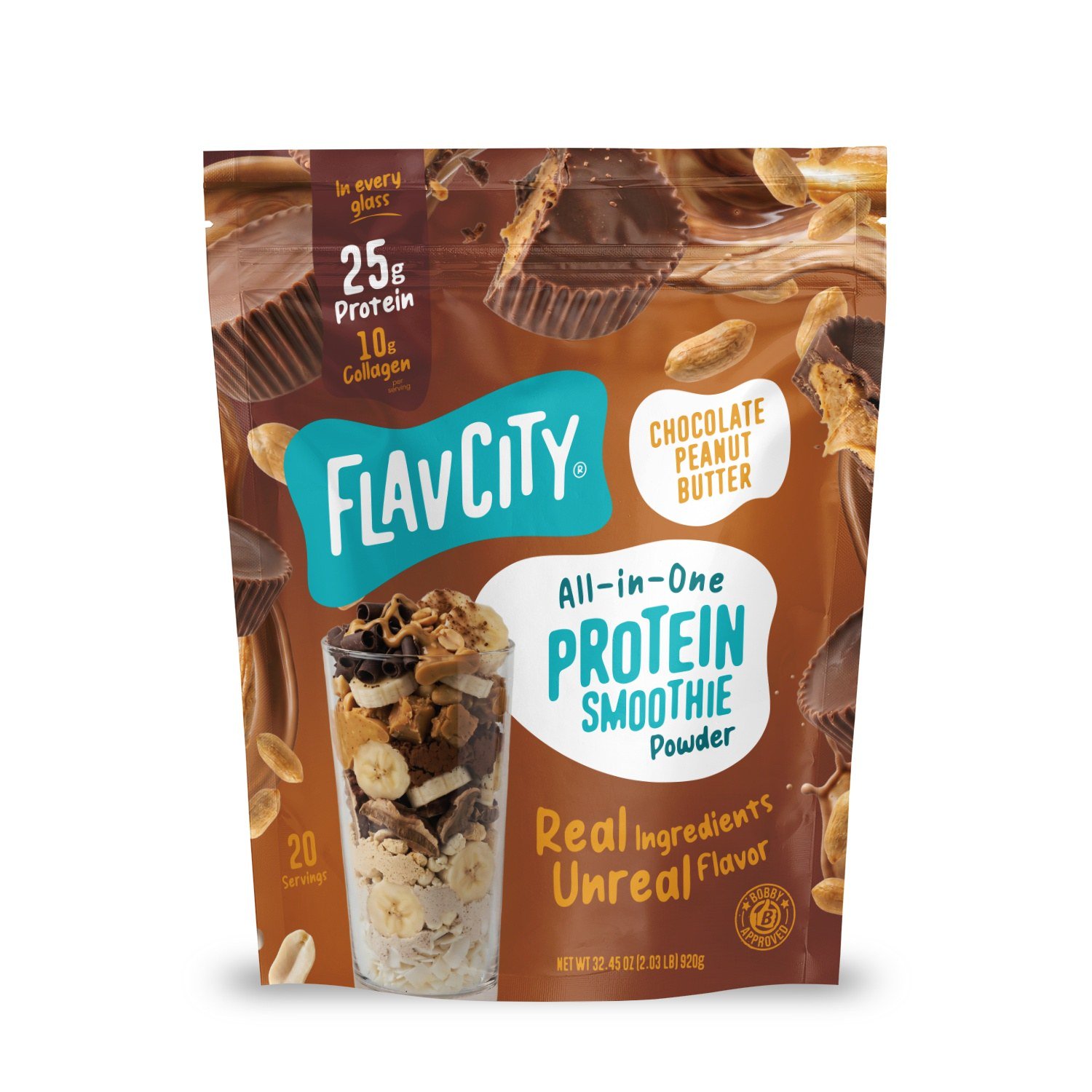
Chocolate Peanut Butter lists whey protein concentrate, grass-fed bovine collagen, milk protein concentrate, and fermented nutritional yeast protein among its ingredients. Its product description advertises 25 grams of protein and 10 grams of collagen, while the Nutrition Facts panel reports 25 grams of protein per serving. Those advertised figures should not be added to claim 35 grams of total protein.
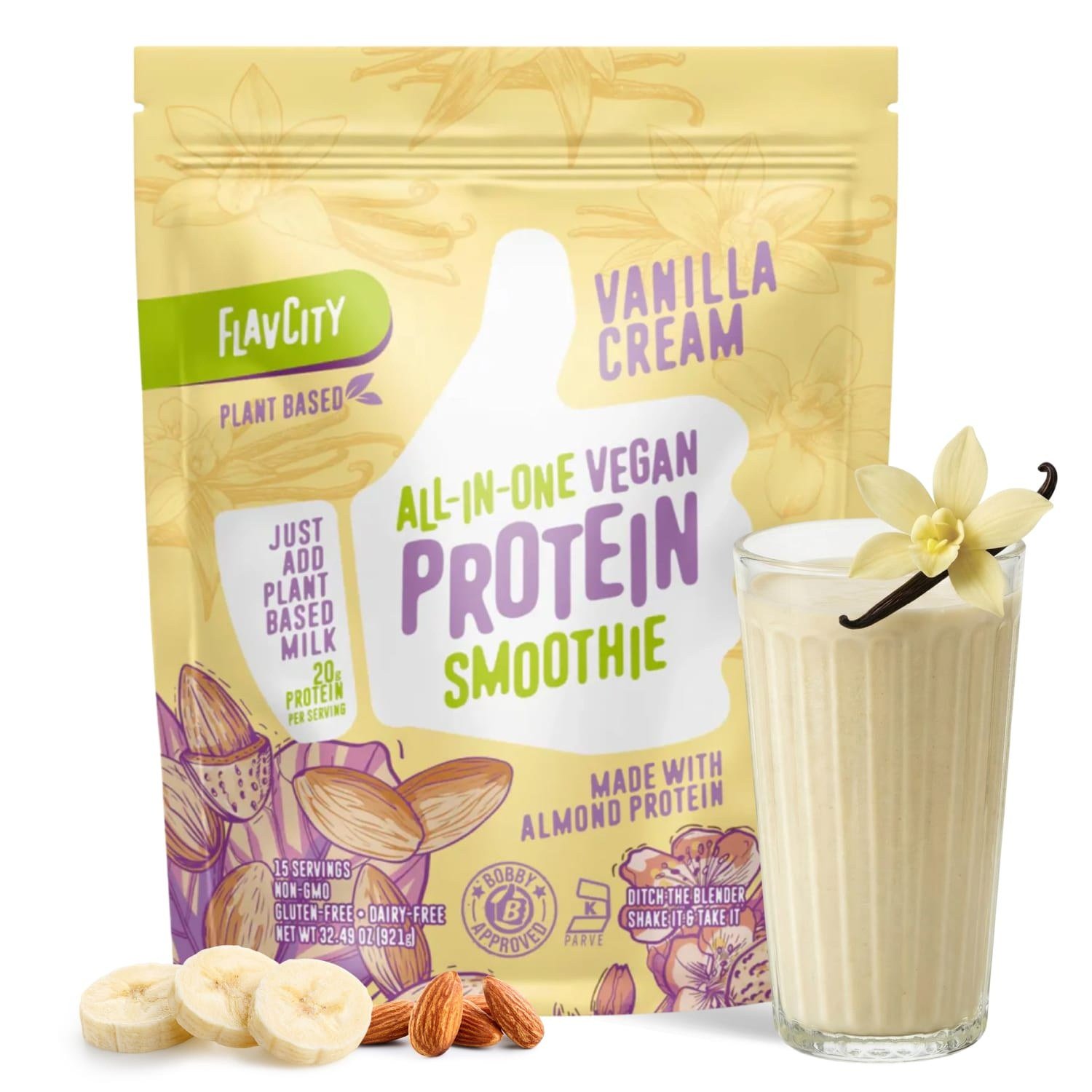
Plant-Based Vanilla instead lists almond protein as its protein ingredient, alongside banana powder, coconut milk powder, vanilla powder, sea salt, cordyceps and reishi powders, stevia, and monk fruit extract. The brand explicitly describes this product as dairy-free and vegan. The animal-derived whey and bovine collagen formula is not an equivalent vegan option simply because it can be mixed with plant milk.
The public labels do not establish how either finished product will affect a particular person’s recovery, fullness, digestion, or cognition. An ingredient list identifies components; it does not supply a clinical comparison. We do not rank the formulas by an invented amino-acid score or assume that equal protein grams would guarantee equal outcomes.
The portions are not the same size
The Chocolate Peanut Butter bag panel states one 46-gram scoop per serving and 20 servings per container. Plant-Based Vanilla states two scoops, 61.4 grams, with 15 servings per container. Comparing one scoop from each product would therefore compare different fractions of their labeled portions.
The official panels report the following amounts per labeled serving:
| Label item | Chocolate Peanut Butter | Plant-Based Vanilla |
|---|---|---|
| Calories | 180 | 250 |
| Protein | 25 g | 20 g |
| Total fat | 3 g | 14 g |
| Total carbohydrate | 11 g | 22 g |
| Dietary fiber | 3 g | 8 g |
| Total sugars | 3 g | 6 g |
| Added sugars | 0 g | 0 g |
| Sodium | 270 mg | 100 mg |
These are manufacturer-reported powder values, not laboratory findings by Brands Review. They concern unequal serving weights and different flavors. They do not prove that switching the protein source alone caused every nutritional difference, and they do not include every possible milk or other ingredient you might add.
The table also shows why “no added sugar” should not be shortened to “no sugar.” Both formulas list total sugars and sweetening ingredients. No claim about blood-sugar control, weight loss, or suitability for a medical condition follows from these numbers alone.
Dairy-free does not mean free of every relevant allergen
The Chocolate Peanut Butter page and package explicitly declare milk and peanut. Its rear label also states that it is manufactured on shared equipment that may contain peanuts or other tree nuts. Those are important boundaries even if you choose water as the mixing liquid.
Plant-Based Vanilla’s webpage prominently calls out almond. Its rear packaging goes further, stating contains almonds and coconut, with shared equipment that may contain peanuts or tree nuts. Coconut milk powder is also named in the ingredient list. A short webpage callout should not replace reading the full package.
The brand’s vegan and dairy-free descriptions are first-party product claims, not our independent manufacturing audit or a personal allergy clearance. A vegan label does not establish that a product suits someone avoiding almonds, coconut, peanuts, or every possible cross-contact risk. Similarly, an ingredient not highlighted on the front does not establish absence throughout a production environment.
For a medically necessary restriction or a history of serious reactions, inspect the current package and obtain qualified advice and manufacturer clarification where needed. We cannot resolve an individual allergy question from general marketing text. Do not use this comparison to override a prescribed dietary restriction.
Distinguish ingredient claims from whole-product certifications
Several ingredients carry an organic descriptor, but that does not automatically make the entire formula a certified-organic product. Chocolate Peanut Butter’s list, for example, specifically labels cocoa and certain other ingredients organic while naming additional ingredients without that descriptor.
The Plant-Based Vanilla nutrition graphic displays dietary-claim icons, including gluten-free and non-GMO. We report their presence as manufacturer claims on that particular graphic, not as independently verified certification of every FlavCity product. We did not establish a certifier, testing protocol, or current batch result for those claims.
Both products include mushroom ingredients. Neither the names reishi and cordyceps nor a phrase such as functional mushrooms proves a specific benefit from the finished serving. The materials reviewed do not provide enough product-specific evidence for us to promise improved focus, an energy effect, or a health outcome.

Preparation instructions reveal another reason to check the package
Chocolate Peanut Butter’s current page permits milk or water, and its rear bag illustrates one scoop with 12 ounces of milk. Plant-Based Vanilla uses two scoops, but its published graphics are not fully consistent about the liquid volume: the instruction graphic says 12 ounces, while the rear package image says 14–16 ounces of plant-based milk.
We do not silently combine those instructions into a single verified recipe. Use the directions on the current product you receive, and clarify a material discrepancy with the manufacturer. A different liquid amount changes concentration; it does not remove ingredients already present in the powder.
The preparation descriptions also do not establish an independently tested texture, a guaranteed mixing time in every bottle, or a safe storage duration for a prepared beverage. Choosing dairy milk for the plant-based powder would change the prepared drink’s dairy status even though the dry formula is marketed as dairy-free.
Listed price and actual availability are separate facts
The official public product data displayed $59.99 for each listing. Chocolate Peanut Butter’s default variant was marked available; Plant-Based Vanilla’s was marked unavailable. The latter is a listed price for an out-of-stock item, not a promise that it can currently be purchased or a statement about its restock date.
Using the observed serving counts, the bag prices correspond to about $3 per Chocolate Peanut Butter serving and $4 per Plant-Based Vanilla serving before shipping and tax. That calculation uses each product’s labeled portion; it does not compare equal powder weights or equal protein quantities. There is no need to invent a restock forecast or pretend that the out-of-stock product is an immediate substitute.
If Plant-Based Vanilla becomes available, recheck its price, formula, and label rather than assuming the archived figures remain unchanged. Our format guide explains why bag and packet counts require the same care.
Keep warnings and personal needs outside a simple winner label
The Chocolate Peanut Butter page displays a California warning naming lead and cadmium; the Plant-Based Vanilla page displays a warning naming lead. Those texts are not concentration measurements and do not establish a comparative exposure ranking. We have not reviewed batch-specific laboratory results that would support declaring one product safer on that basis.
Neither category earns a universal recommendation from this comparison. Someone seeking an explicitly vegan formula is asking a different question from someone comparing the declared milk, peanut, almond, or coconut ingredients. Someone evaluating a medical diet needs information beyond a commercial category label and a few nutrient figures.
The FlavCity hub links to our label review and ordering-policy guides. The official-store route is an affiliate tracking link that may earn Brands Review a commission. Use the specific label and current availability to narrow the choice; do not interpret that link, or the brand’s own marketing, as a medical recommendation or a guarantee of results.
References
- FlavCity: Chocolate Peanut Butter ingredients, warnings, and label gallery
- FlavCity: Plant-Based Vanilla ingredients, claims, warnings, and gallery
- FlavCity: Chocolate Peanut Butter current public variant data
- FlavCity: Plant-Based Vanilla public price and unavailable status
- FlavCity: Plant-Based Vanilla Nutrition Facts graphic
- FlavCity: Plant-Based Vanilla rear package and shared-equipment statement
- FlavCity: Plant-Based Vanilla preparation graphic
Meet your guide
Lipeiguan
author
What to read next
 FlavCity Flavor Guarantee vs. Refunds: Taste, Transit Damage, and Lost Orders Find the correct post-purchase route: a restricted one-time full-size bag flavor swap, final-sale policy, approved lost/damaged transit replacement, sold-out fallback, evidence and...
 FlavCity Subscription vs. One-Time Orders: Billing, Shipping, and Cancellation Timing Separate recurring-order marketing from written terms: eligibility, current 15% and domestic-shipping presentation, variable future prices, seven-day billing cutoff, skip/pause/can... FlavCity Chocolate Peanut Butter Protein Smoothie Review: Reading the 20-Serving Bag A label-based review, not a taste test: the current 46-gram serving, calories and nutrients, whey/collagen blend, sweeteners, milk and peanut declarations, shared-equipment warning...