Public Storage Unit Sizes: Official Square Footage and Use Examples
A research shortlist of official Public Storage size-guide figures, from 5-by-5 closet units through 10-by-25 garage-style units and vehicle lengths, with the official note that sizes are approximate and may vary by facility, checked November 18, 2026.
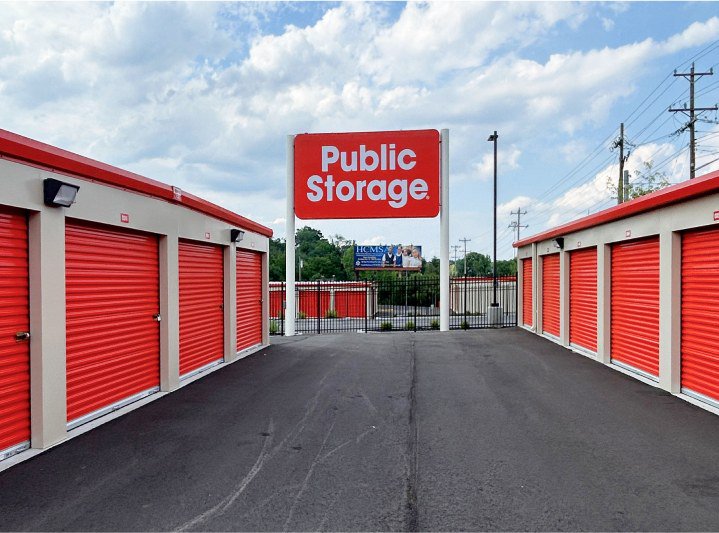
Disclosure: This page may contain affiliate links. They do not influence our editorial conclusions. Read the disclosure.
Our pick
- See price at Public Storage
Top pick
Public Storage
Public Storage operates a U.S. and Canada self-storage network at publicstorage.com, with official pages describing more than 4,600 locations, online and in-per...
The official Public Storage size guide, checked November 18, 2026, publishes approximate floor dimensions, square footage, and cubic-foot figures that assume an 8-foot height, plus everyday comparisons such as a closet, a bedroom, or a one-car garage. This shortlist reprints those official figures. It is not a warehouse survey, and it does not assign a rent amount to any size, because official pricing is location-specific.
The same page states that sizes are approximate and may vary by facility. Read every number below with that sentence attached. If you are choosing a rental path, see how to rent a unit. A closer look at closet-scale versus bedroom-scale examples is in the small versus medium comparison.

Official unit figures
The size guide lists the following indoor unit examples, with square footage and the cubic-foot totals printed beside an 8-foot height. The comparisons in parentheses are the official everyday examples from the same page, not an independent staging test.
A 5-by-5 unit is published as 25 square feet and 200 cubic feet, compared with a closet. A 5-by-10 unit is published as 50 square feet and 400 cubic feet, compared with a studio, a large shed, or a mid-sized bedroom. A 5-by-15 unit is published as 75 square feet and 600 cubic feet, compared with a large bedroom or a large walk-in closet.
A 10-by-10 unit is published as 100 square feet and 800 cubic feet, compared with two small bedrooms or an average small bedroom. A 10-by-15 unit is published as 150 square feet and 1,200 cubic feet, compared with a two-bedroom home or a large bedroom. A 10-by-20 unit is published as 200 square feet and 1,600 cubic feet, compared with a small one-car garage. A 10-by-25 unit is published as 250 square feet and 2,000 cubic feet, compared with a large one-car garage.
Those official comparisons sometimes use more than one household image for the same footprint. A 10-by-10 is both “two small bedrooms” and “an average small bedroom.” A 5-by-10 is both a studio and a mid-sized bedroom. That is official wording, not a contradiction you have to resolve before you visit. It is a reminder that furniture volume, aisle space, and stacking height change what a footprint can hold, and that the guide is offering orientation rather than a packing certificate.
Because cubic feet are printed from an 8-foot height, a unit with a different clear height would not match the published cube even if the floor dimensions were the same. The size guide does not, in the figures captured here, publish a second height table. If ceiling height matters for stacked boxes or tall furniture, ask the facility for the actual clear height of the unit you are offered, and inspect that unit before you rent it, which official rental copy already instructs you to do.
Vehicle units
The size guide also lists vehicle-oriented lengths: up to 20 feet for most cars, 35 feet for most RVs and boats, and 50 feet for oversize vehicles. Those are official length examples, not a catalog of every parking space at every property. Features, surface, access hours, and whether a vehicle space is covered or uncovered vary by facility. Measure the vehicle, including hitch or racks if they add length, and confirm the actual space with the property.
Vehicle storage is a different decision from a 10-by-20 “small one-car garage” indoor unit. The garage comparison on the 10-by-20 and 10-by-25 rows describes an indoor footprint in official household terms. The 20-foot, 35-foot, and 50-foot figures describe vehicle-unit lengths. Do not treat them as interchangeable without asking what the facility actually has.
How to use the figures without over-reading them
Start with the official everyday comparison that is closest to what you are storing, then look at the square-footage number, then confirm the live unit. If you are emptying a two-bedroom home, the official 10-by-15 example is the published match, at 150 square feet and 1,200 cubic feet at the printed 8-foot height. If you are storing closet contents or a handful of boxes, the official 5-by-5 closet comparison is the starting point. If you are between those, the 5-by-10 and 5-by-15 rows are the official mid points.
Climate-controlled units appear at select locations only. Official language says temperature and humidity ranges are not guaranteed, and that features vary by location, facility, and unit. A size-guide footprint does not tell you whether a given unit is climate-controlled. If that feature is a requirement, filter or ask at the property and still read the no-guarantee sentence.
Reservations do not guarantee availability, and official online pricing applies to online reservations and rentals. A size you selected on the guide may not be open at the facility on the day you arrive. Official copy tells you to inspect the unit before renting. That inspection is also the moment to compare door type, access, and the approximate dimensions with the published row you used.
This shortlist does not include a rent column, a deposit column, or a move-in fee schedule, because those amounts are not published as a national size-by-size price list on the guide. Official first-month language says the total includes rent and applicable move-in fees, and that insurance is not included. An official footnote has referred to a $29 administrative fee that can apply. Confirm every amount on the reservation or agreement for the chosen facility.
If you decide to continue, use /go/publicstorage or the official site, choose a location, and compare the live unit with the official size row and the approximation caveat before you pay.
Reading square footage beside cubic feet
The official table is easier to use if you keep floor area and volume distinct. Square footage is the published length times width. Cubic feet, on the size guide, are that floor area multiplied by the printed 8-foot height. A 5-by-5 and a 10-by-10 are official labels that already show this: 25 square feet becomes 200 cubic feet, and 100 square feet becomes 800 cubic feet, at that printed height. If a unit is not 8 feet tall, the official cube will not be the cube you get.
That is why official text also tells you that sizes are approximate and may vary by facility. Variation can be a slightly different footprint, a different clear height, a bulkhead, a sloped floor, or a door that takes space from one wall. The guide cannot show every local exception. The inspection step in official rental copy is the practical way to see whether the official row still describes the unit you are being offered.
Household comparisons should be read the same way. “Closet,” “mid-sized bedroom,” and “small one-car garage” are official orientation phrases. They are not inventories. A closet that holds only hanging clothes is not the same as a closet used as overflow for packed bins, and a one-car garage can be a parking space or a packed workshop. If your list is long, step up one official row rather than assuming you can compress a two-bedroom official example into a 5-by-10 because you are a careful packer. This shortlist does not claim a packing efficiency, because no packing test was done.
The width-versus-length pattern on the official 5-foot and 10-foot rows also matters when you think about doors and aisles. A 5-by-15 and a 10-by-10 are not far apart in official square footage, at 75 versus 100, but the official widths differ. Long furniture, a mattress, or a need to keep a walkway can make one shape more usable than the other even when the published area looks close. Ask how the door is placed, then inspect the unit.
Vehicle rows should stay in their own official column. A car that is 16 feet long may match the “up to 20 feet for most cars” official example, but that does not automatically mean a 10-by-20 indoor unit, whose official comparison is a small one-car garage, is the right product, or that a vehicle space is available at the same property. Confirm the product type with the facility.
Finally, official size figures do not include a climate-control mark, a ground-floor mark, or a price. Those attributes have to be checked on the location page or at the property. Use the official rows to narrow the search, then confirm the live unit and the first-month total before you pay.
References
Meet your guide
Lipeiguan
author
What to read next
 The Paper Store Gift Budget Guide: Six Prices from $14 to $40 Six product-page prices from $14 to $40, with recipient-fit notes, battery and care requirements, basket arithmetic, and shipping costs; checked November 18, 2026.
 The Paper Store Snowflake Throw vs. Alight Candle, at Official Prices A research comparison of official The Paper Store listings for the $40 Legacy and Main Snowflake Embossed Texture Luxury Throw Blanket and the $20 Alight Candles Snowflake Embossed... How to Return a The Paper Store Order, Including the 45-Day and 46-to-60-Day Windows How official The Paper Store returns pages describe 45-day refund or exchange paths, 46-to-60-day in-store merchandise credit, mail returns that are ineligible for exchange, and of...