XCEL and the Texas General Lines Life and Health License: A First-Time Resident’s Roadmap
Map optional XCEL preparation to Texas’s resident individual General Lines Life, Accident, Health and HMO route: correct exam, fingerprint portal, application window, fees, and scope boundaries.
Disclosure: This page may contain affiliate links. They do not influence our editorial conclusions. Read the disclosure.
Our pick
- See price at XCEL Solutions
Top pick
XCEL Solutions
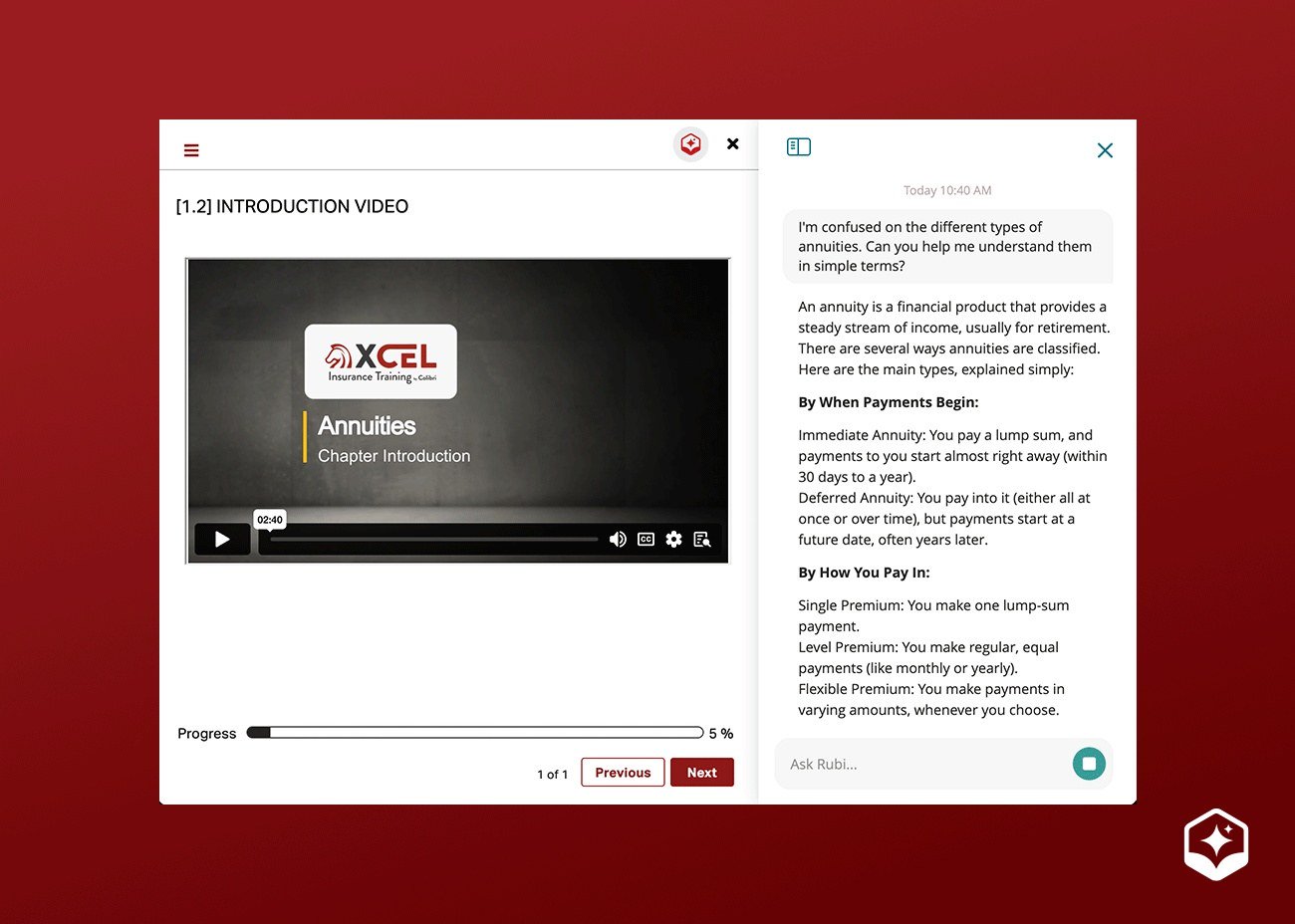
XCEL Solutions provides insurance education and exam-preparation courses, including Life and Health packages, a three-part study program, and Rubi study support...
What this guide covers
- 01Match the intended authority before enrolling
- 02Understand where optional preparation fits
- 03Step 1: Pass the correct state examination
- 04Step 2: Start TDI’s fingerprint process using its portal
- 05Step 3: Submit the resident individual application on time
- 06Do not import rules from the wrong section of the page
If your goal is a Texas General Lines Life, Accident, Health and HMO license, the first decision is not which XCEL package to buy. It is which licensing route applies to you. A first-time resident individual, an agency, a nonresident producer, and a sponsored temporary-license applicant do not follow interchangeable checklists.
This roadmap concerns the ordinary first-time Texas resident individual route. It uses Texas Department of Insurance guidance and XCEL’s public Texas information reviewed November 18, 2026. XCEL is a preparation provider; TDI sets licensing requirements and makes licensing decisions. Nothing here establishes that a particular applicant is eligible or promises a processing date.

Match the intended authority before enrolling
TDI’s relevant license page is titled General Lines—Life, Accident, Health and HMO. Its careers guide identifies the common Life, Accident and Health examination as InsTX-LAH05. Confirm the current examination listing with Pearson VUE and TDI before booking rather than relying only on a course’s abbreviated name.
A Life-only product, a Property and Casualty course, and an adjuster course address different objectives. Similar-looking package cards do not make them substitutes. Record the state, residency status, intended authority, and course title together so a purchasing error is easier to spot before accessing the product.
If an employer offers to pay, establish which course and examination costs it covers and which application tasks remain yours. Company sponsorship of tuition is not the same as state approval of a license application. It can also matter to commercial policies: XCEL’s separate Prepared to Pass Promise excludes company-paid packages, so a candidate should not assume every funding arrangement carries identical refund eligibility.
Understand where optional preparation fits
XCEL’s Texas requirements page says Texas does not impose a formal prelicensing education requirement for this ordinary route and recommends preparation. TDI’s resident checklist begins with the examination rather than requiring purchase of a particular commercial course. Its careers page likewise recommends studying and discusses preparation providers.
The important distinction is between buying help to prepare and satisfying a legal requirement to buy that help. XCEL may offer a structured way to study, but its certificate should not be described as a universally required Texas admission ticket for the ordinary resident examination. No reviewed regulator source requires every candidate on this route to purchase XCEL.
The provider describes foundational lessons, Prep Review, and sequential exam simulators. Evaluate those resources against your knowledge gaps and the current examination outline. A course’s own comprehensive exam remains different from the Pearson VUE state examination, even when both are called an “exam” in account navigation.
This is not an argument to skip preparation. It is an argument to know what your payment purchases. A learner can need substantial study without being legally required to complete a named provider’s hours. Our XCEL study-workflow guide focuses on using the tools rather than converting them into licensing requirements.
Step 1: Pass the correct state examination
TDI directs candidates to Pearson VUE for the candidate handbook, examination outlines, scheduling information, and relevant language-request guidance. Use those current materials for appointment identification rules, testing arrangements, and any request procedures. An online preparation course does not establish that the state examination can be taken remotely or in a particular language.
Keep the state examination result and the candidate information associated with it. These records serve a different purpose from an XCEL transcript or chapter score. Make sure your name and identifying details are consistent with the examination and application instructions; a study account nickname is not a substitute for the identity information the vendor requires.
For the ordinary resident agent application, TDI explicitly says to pass the examination before applying. Applying first is not a harmless way to reserve a place in line: the department says an applicant who files before passing must submit a new application afterward and pay the fee again.
There are exceptions to examination requirements, including certain existing-license situations and the Chartered Life Underwriter designation. This guide does not determine an exemption. If one may apply, use the relevant TDI instructions rather than assuming a first-time checklist overrides it or that a commercial course grants the exemption.
Step 2: Start TDI’s fingerprint process using its portal
After the examination step, TDI’s published sequence says to begin the application process on its online initial application and fingerprint portal. This step supplies the fingerprint service code and instructions. It should not be confused with submitting the final license application through Sircon or NIPR.
Most applicants need an IdentoGO fingerprint background check and must send TDI a copy of the receipt showing that the fingerprints were sent to the Texas Department of Public Safety. Follow the current portal instructions for your case. Do not select an unrelated employment fingerprint category merely because a nearby appointment is convenient.
TDI lists exemptions, including a Texas resident who has an active TDI license or registration and previously submitted fingerprints. That is different from having been fingerprinted at some point for an unrelated purpose. Preserve the receipt and confirmation information, and establish whether an exemption actually applies rather than treating a prior background check as automatically reusable.
Fingerprint collection is part of the application process, not proof that a license has been approved. Any questions about disclosures, records, or eligibility belong with the regulator or an appropriately qualified adviser, not an AI study assistant or a course sales description.
Step 3: Submit the resident individual application on time
TDI instructs resident agents to apply through Sircon or the National Insurance Producer Registry. The application must be submitted within one year of passing the examination, or the examination must be retaken. This is an application deadline, not a promise that the state will issue a license within that period or within a particular number of days after filing.
The listed resident agent application fee is $50, before considering any applicable exemption or additional service charges. Keep that figure separate from tuition, examination fees, fingerprinting, and processing charges. XCEL’s national Life and Health page expressly says its course price does not include the state examination fee.
A practical budget has separate lines for each payee and each event. Mark unverified charges as unknown rather than combining remembered vendor prices into an apparently precise all-in total. Also retain application confirmations and copies of submitted material. A payment receipt establishes a transaction; it does not by itself establish that every required document has been accepted.
Do not import rules from the wrong section of the page
TDI’s license page contains resident agency, nonresident, temporary-license, and other sections alongside the resident individual instructions. An agency’s designated responsible licensed producer, business registration, and proof-of-financial-responsibility requirements should not be copied into an ordinary individual checklist as though every new agent must form an agency.
The sponsored temporary route is different too. TDI describes a one-time 180-day temporary license, sponsor certification, and specified training obligations. Those conditions do not turn a standard XCEL package into a temporary license or make that route’s training requirement the universal rule for permanent resident applicants.
Likewise, holding a resident license in another state can change the relevant pathway. A nonresident checklist should not be used merely because its examination language looks easier. Choose the correct residency and license category first, then read that category’s complete instructions.
Know when the preparation stage has actually ended
For planning purposes, keep three milestones distinct: completing any chosen education, passing the required state examination, and receiving the state license. Progress on one does not automatically complete the others. After issuance, renewal, continuing education, and any additional authority or transaction-specific obligations require their own review; this first-application guide does not resolve them.
No responsible purchase decision should depend on an invented XCEL pass rate or a guaranteed time to become licensed. The official public pages support a sequence and a set of available study tools, not an individual result. Historical examination statistics on a government careers page should not be relabeled as current provider performance.
The XCEL Solutions brand page collects our related package and policy guides. If the product fits your preparation needs, the official-site route uses our joined affiliate tracking link and may earn Brands Review a commission. It does not file your application, book your examination, or replace TDI’s instructions.
References
Meet your guide
Lipeiguan
author
What to read next
XCEL Refunds vs. the Prepared to Pass Promise: Two Different Policies, Two Different Clocks Read ordinary cancellation rules alongside Premier’s separate conditional first-exam-failure policy, including access restrictions, fees, simulator attempts, short claim deadlines,... XCEL and California Life and Health Licensing: Optional Exam Prep, Required Ethics, and the State Exam Separate California’s 2026 education change, the retained 12-hour ethics requirement, optional XCEL preparation, current remote-exam transition dates, and conflicting fingerprint s... How to Use XCEL’s Three-Part Study Program Without Confusing Practice With Exam Readiness A practical, source-based workflow for lessons, Prep Review, sequential simulators, Rubi questions, error logs, locked tabs, and a realistic study calendar without promised results...