XCEL and California Life and Health Licensing: Optional Exam Prep, Required Ethics, and the State Exam
Separate California’s 2026 education change, the retained 12-hour ethics requirement, optional XCEL preparation, current remote-exam transition dates, and conflicting fingerprint summaries.
Disclosure: This page may contain affiliate links. They do not influence our editorial conclusions. Read the disclosure.
Our pick
- See price at XCEL Solutions
Top pick
XCEL Solutions
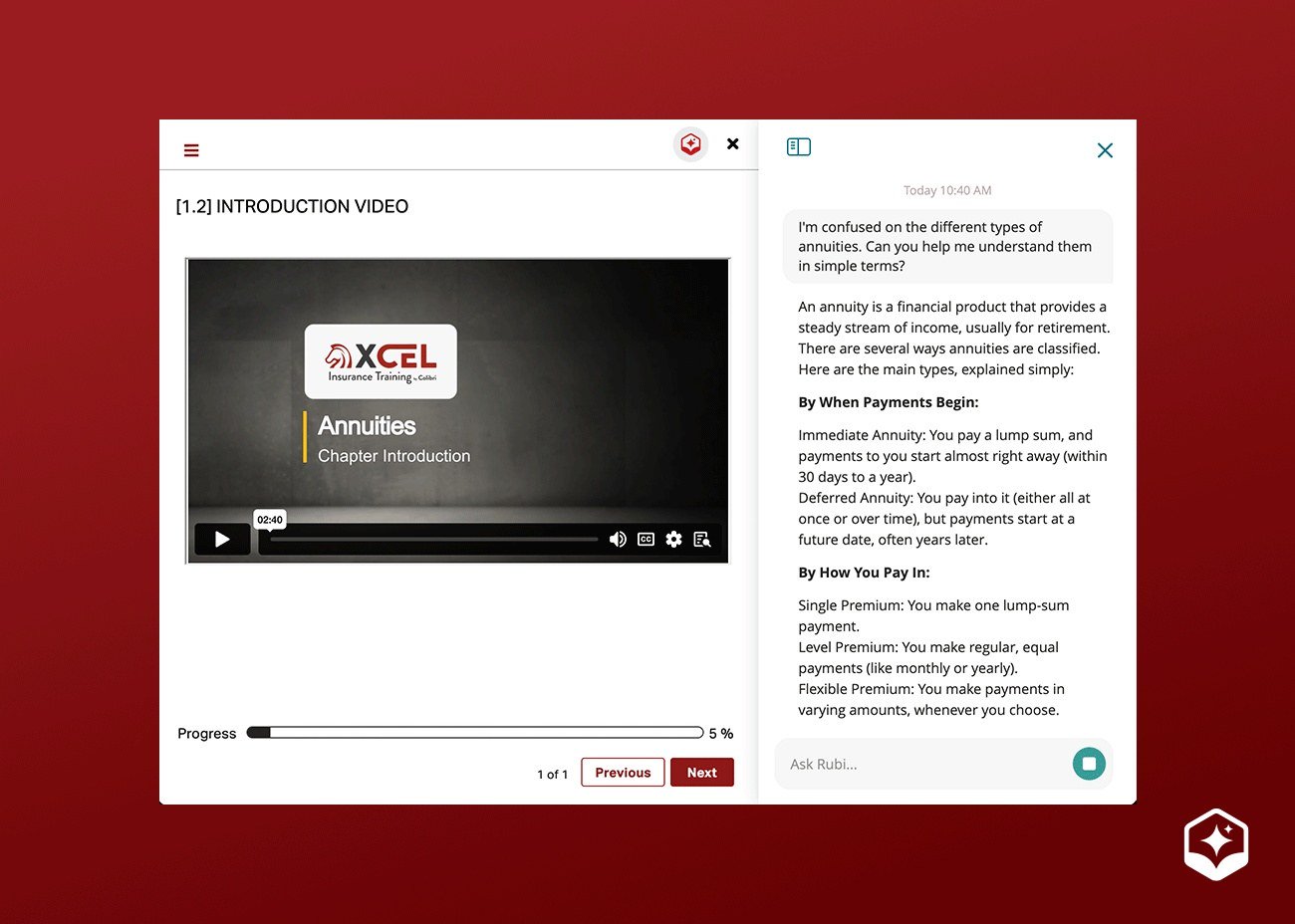
XCEL Solutions provides insurance education and exam-preparation courses, including Life and Health packages, a three-part study program, and Rubi study support...
What this guide covers
- 01What changed on January 1, 2026
- 02Required ethics and optional exam preparation are different components
- 03Decide what work you need XCEL to do
- 04Check the current examination-delivery transition
- 05Follow the resident application process—and recognize a source conflict
- 06Keep certificates, exam results, and application records separate
A California insurance course and a California insurance license are not the same purchase. That distinction became especially important in 2026: the state removed a specified prelicensing education requirement for several producer lines, but it did not eliminate the licensing examination or every education obligation.
For a first-time California resident considering Life and Accident and Health or Sickness authority, XCEL can be an education and preparation option. It is not the agency that determines eligibility or issues the license. This guide separates those roles using California Department of Insurance material and XCEL’s public pages reviewed November 18, 2026. It is general process information, not an individual eligibility determination.

What changed on January 1, 2026
CDI’s AB 943 education FAQ says the 20-hour prelicensing education requirement was removed for specified producer license types beginning January 1, 2026, including Life and Accident and Health or Sickness. It also says applicants must still complete the required 12 hours of California insurance code and ethics study before license issuance.
Three conclusions follow. First, optional preparation may remain useful even when the old 20-hour requirement no longer applies. Second, completing the required ethics component does not replace the state examination. Third, removing a required course does not remove the knowledge tested by that examination.
Do not generalize this change to every license containing the word “insurance.” CDI identifies different treatment for categories such as bail and public adjuster. This article concerns the named producer lines, not every education program XCEL or another provider sells. Existing licensees adding authority, nonresidents, and applicants claiming an exemption should use instructions for their actual situation.
Required ethics and optional exam preparation are different components
CDI’s FAQ explicitly says the 12-hour ethics and California insurance code course is required before license issuance, not as a prerequisite to scheduling or taking the examination. A study-first sequence may be convenient, but convenience should not be restated as an examination eligibility rule.
The same FAQ distinguishes approval of required ethics education from optional producer exam preparation. CDI continues reviewing the required ethics course; the optional preparation courses affected by the change are no longer reviewed and approved in the same way. Consequently, “this provider sells California preparation” does not establish that every part of its commercial package is CDI-approved education.
XCEL’s Life and Health package table describes Code & Ethics inclusion where applicable. Before paying, identify the exact selected California product, the required ethics component, and its current approval status through the regulator’s course information. We have not independently verified a specific XCEL course approval number here. A national package description alone is insufficient to make that claim.
If you already completed ethics education for another California producer application, check CDI’s rules before purchasing it again. Its resident Life application page says the required 12-hour course is generally taken once rather than repeated for every additional license type. That does not mean every prior course, certificate, or out-of-state class automatically qualifies.
Decide what work you need XCEL to do
XCEL describes a three-part preparation system: foundational coursework, focused Prep Review, and sequential exam simulators. In California, evaluate those tools as preparation for the knowledge assessment, separately from whether a particular ethics course fulfills the remaining education requirement.
Start with CDI’s examination objectives for the actual authority you want. Compare your existing knowledge with those objectives, then choose whether structured instruction, a review stage, and practice assessments would address identifiable gaps. Do not buy solely because an old checklist says a 20-hour producer course is mandatory.
Nor should you assume that the removal of mandatory hours makes preparation unnecessary. Legal minimum education and examination readiness answer different questions. Someone unfamiliar with policy provisions or insurance terminology may still need extensive study; another applicant may need a different approach. Neither case can be resolved by a marketing completion estimate.
XCEL’s course completion exam and the state examination are also separate events. A course certificate documents applicable education completion. It does not authorize insurance transactions and does not show that CDI has completed its review of your application.
Check the current examination-delivery transition
CDI’s dated November 2, 2026 notice provides more specific information than a generic page advertising remote examinations. Effective November 6, 2026, PSI stopped scheduling new remotely proctored producer and bail agent examinations. Remote appointments scheduled before that date may still be administered through December 31, 2026.
Beginning January 1, 2027, the notice requires those producer and bail examinations to be taken in person at PSI test centers or CDI’s Los Angeles test center. It preserves remote options for specified other categories, including independent adjusters, public adjusters, and life and disability insurance analysts. Those exceptions should not be applied to an ordinary Life producer appointment.
This means “all remote exams ended November 6” would be inaccurate: the notice distinguishes new scheduling from previously scheduled appointments. It would also be inaccurate to assume that an old remote-testing advertisement guarantees a new remote producer appointment now. Check the current candidate bulletin and PSI booking instructions for your examination before arranging travel or aligning a course deadline with an appointment.
An online XCEL course does not determine how the state exam is delivered. Studying from home and testing from home are two different arrangements controlled by different organizations.
Follow the resident application process—and recognize a source conflict
CDI’s resident Life application checklist directs applicants to pass the examination and then submit the electronic license application through the state’s stated service. Supporting documents and background review remain separate from the education provider’s completion process. Do not treat a course enrollment confirmation as evidence that an application has been filed.
Fingerprint sequencing requires particular care because CDI’s public pages are not fully consistent. Its dedicated California resident fingerprint page and resident Life application checklist say new applicants should submit fingerprints after filing the license application. The ethics FAQ contains a different description placing fingerprints before application submission.
We do not present those descriptions as if they agree. For the fingerprint procedure, consult the dedicated resident fingerprint instructions and confirm the current sequence with CDI if the conflicting summary affects your case. The dedicated page describes registration through CDI’s selected vendor, an appointment confirmation or payment identifier, and retention of the resulting fingerprint records. Do not substitute an unrelated employer’s background check or a random fingerprint service without checking the official instructions.
This conflict is a reason to preserve source links and verify the operational step, not a reason to guess a new universal rule. Provider summaries are useful orientation, but the regulator’s current process governs the application.
Keep certificates, exam results, and application records separate
Maintain a small document file with the exact course identity, any required education certificate, state examination result, application confirmation, and fingerprint records where applicable. Label each by what it proves. A passing state examination is not itself a license; an education certificate is not a passing state examination result.
XCEL’s support guidance says certificates become available after the applicable course requirements and course exam are completed. Its California guide also describes provider-specific progression and reporting procedures. Those describe how the education service operates; they should not be expanded into a guaranteed date for CDI to issue a license.
Before spending more money, identify the actual bottleneck. An incomplete required ethics component calls for a different response from an examination that has not been scheduled, an application awaiting documents, or a fingerprint issue. Buying another review product cannot necessarily resolve any of the latter administrative problems.
Make a complete budget without inventing a total
Separate course tuition from state examination charges, application fees, fingerprint costs, and any optional extensions or retakes. The national XCEL package page explicitly excludes the state examination fee from tuition. We do not combine unverified fee figures into an apparently authoritative all-in California price.
Choose the package only after confirming what is included and what remains your responsibility. The Standard versus Premier comparison addresses study-tool differences; the XCEL Solutions hub organizes related guidance. Our official-site route is an affiliate link that may earn Brands Review a commission, not a regulator endorsement or an application service.
The useful end point is a clear division of responsibilities: use XCEL for the specific education or preparation purchased, use CDI and its examination vendor for current state procedures, and wait for actual license issuance before assuming you are licensed. None of those steps supplies a guaranteed passing score or an assured processing timetable.
References
- CDI: AB 943 and the retained 12-hour ethics requirement
- CDI: Resident Life application procedures
- CDI: Dedicated California resident fingerprint requirements
- CDI: November 2, 2026 remote-exam transition notice, PDF
- XCEL: California provider guidance
- XCEL: Life and Health package descriptions
- XCEL: Certificates and course support
Meet your guide
Lipeiguan
author
What to read next
XCEL Refunds vs. the Prepared to Pass Promise: Two Different Policies, Two Different Clocks Read ordinary cancellation rules alongside Premier’s separate conditional first-exam-failure policy, including access restrictions, fees, simulator attempts, short claim deadlines,... XCEL and the Texas General Lines Life and Health License: A First-Time Resident’s Roadmap Map optional XCEL preparation to Texas’s resident individual General Lines Life, Accident, Health and HMO route: correct exam, fingerprint portal, application window, fees, and sco... How to Use XCEL’s Three-Part Study Program Without Confusing Practice With Exam Readiness A practical, source-based workflow for lessons, Prep Review, sequential simulators, Rubi questions, error logs, locked tabs, and a realistic study calendar without promised results...